Board Certified Specialist vs General DVM
Making sure one is making the right decision of who will be taking care of your fury family member can be daunting, stressful and worst of all frightening in an already often sudden and critical situation.
🏥 1. Specialist (Board-Certified Veterinary Surgeon or Neurologist)
A veterinary surgeon/Neurologist has completed advanced training (residency) and passed certification exams from a specialty board (like the American College of Veterinary Surgeons or American College of Veterinary Internal Medicine-Neurology).
✅ Pros
- Highly specialized: Expert in complex surgeries like orthopedic, neurological, or soft tissue procedures.
- Better outcomes in complicated cases: More precision, lower complication rates for difficult procedures.
- Access to advanced equipment: Often works at specialty hospitals with better diagnostics, surgical tools, and aftercare.
- Handles high-risk patients well: Especially useful for pets with other health problems or advanced conditions.
❌ Cons
- More expensive: Consultation fees, surgical costs, and follow-ups are significantly higher.
- Referral often required: Usually, your regular vet must refer you — not always direct access.
- May involve travel: Specialists are usually located in urban areas or veterinary teaching hospitals.
🐾 2. Regular Veterinarian
A general-practice vet (DVM) who provides everyday care and performs routine surgeries like spay/neuter, dental work, and some soft tissue procedures.
✅ Pros
- Convenient and accessible: Usually located nearby and easy to schedule.
- Lower cost: Much more affordable for routine surgeries or general care.
- Trusted relationship: If it’s your regular vet, they know your pet’s history.
- Handles most common procedures well: Great for spays, neuters, minor mass removals, etc.
❌ Cons
- Limited surgical expertise: May not be equipped or trained for complex procedures.
- May lack advanced equipment: Smaller clinics often don’t have imaging (CT, MRI) or specialized anesthesia monitoring.
- May refer out anyway: If the case is too complex, they’ll refer you to a surgical specialist — costing more time.
Why Choosing the Right person matters for Your Pet
Dr Garcia has been focusing on bridging the gap between the two options above to provide advanced surgical care that every pet needs in a wider range of financial capacity.
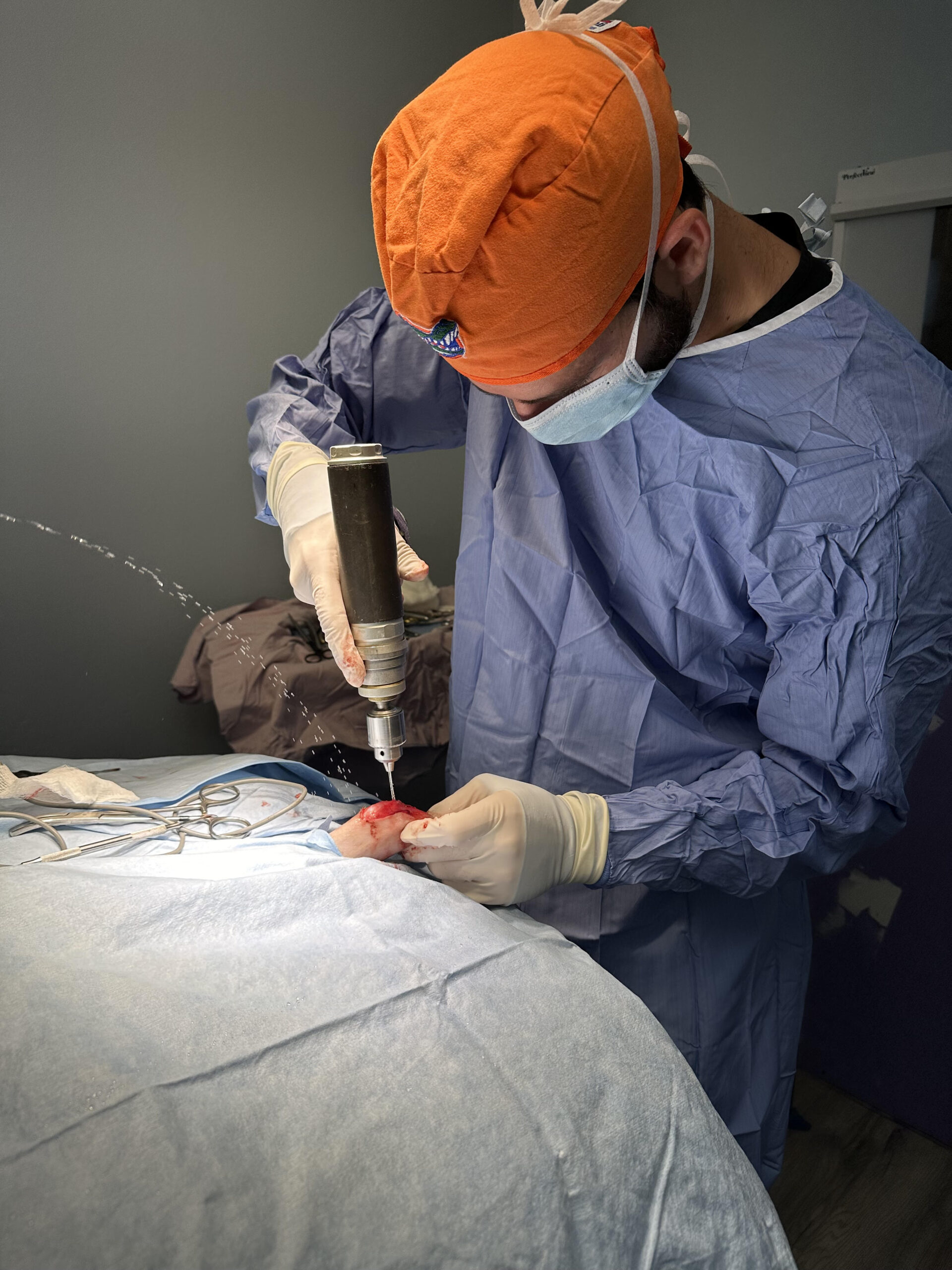
For the past six years, Dr. Garcia has dedicated his practice exclusively to surgery, focusing on delivering excellent outcomes for his patients through experience, education, and advanced technology. His commitment to continuing education includes completing elite training programs such as Arthrex and AO Master Courses, as well as collaborating with top specialists both in the U.S. and internationally.
By performing complex surgical procedures on a daily basis, Dr. Garcia has developed a high level of expertise that contributes to successful outcomes with minimal complications. He is equipped with advanced diagnostic equipment, including an in-house CT scanner, allowing for fast and precise identification of issues like herniated discs.
Additionally, Dr. Garcia works with highly trained technicians skilled in administering sophisticated anesthesia protocols and managing potential intraoperative complications such as low blood pressure (hypotension), apnea, significant bleeding, and even the need for blood transfusions or management of irregular heart rhythms.
Thanks to this level of preparation and expertise, many of the procedures Dr. Garcia offers—though they may typically require hospitalization—can be performed in a more cost-effective way without the need for prolonged or intensive postoperative care. Factors such as reduced overhead, use of CT/contrast imaging instead of more costly MRI*, and independence from private-equity-owned hospitals contribute to more accessible pricing, while maintaining a high standard of care.
Ultimately, choosing a trained, vetted, and regulated boarded specialist may give you peace of mind, knowing your pet is in experienced hands. If this is your requirement we recommend calling a referral center.
However, venturing outside traditional specialty care settings can sometimes offer financial savings. It’s essential to thoroughly research and ensure that care meets the necessary medical standards.
Your pet deserves the best chance at a full recovery—and that starts with choosing the right provider to fit your situation.
*CT/Contrast imaging vs MRI= MRI is the most sensitive of the two and provides a more not only diagnostic information but also prognostic information. Additionally MRI does not use contrast, which can on occasion cause neurological complications or adverse reactions. That being said for herniated disk, CT is used by many to adequately diagnose and treat IVDD with excellent results without complications in most cases at a lower cost.*